
While preparing for the National Counselor Examination (NCE), the Counselor Preparation Comprehensive Examination (CPCE), or another counseling exam, having a good understanding of mental health diagnoses is important. Expand your understanding of Bipolar I Disorder with this video.
Like many mental health diagnoses, Bipolar disorders are something people will often use in their general day-to-day language. Such as saying things like, “I am so Bipolar” or “they must be Bipolar” in situations where they or someone else have seemingly sudden changes in emotion. While Bipolar disorders involve changes in mood, these is different from what most people are referring to. Instead, Bipolar 1 Disorder, as you will see, is a diagnosis that can have significant impacts on people’s lives. Being mindful of the language you use can be a helpful way to be more respectful of the experiences of those with Bipolar Disorders.
Changes in Mood
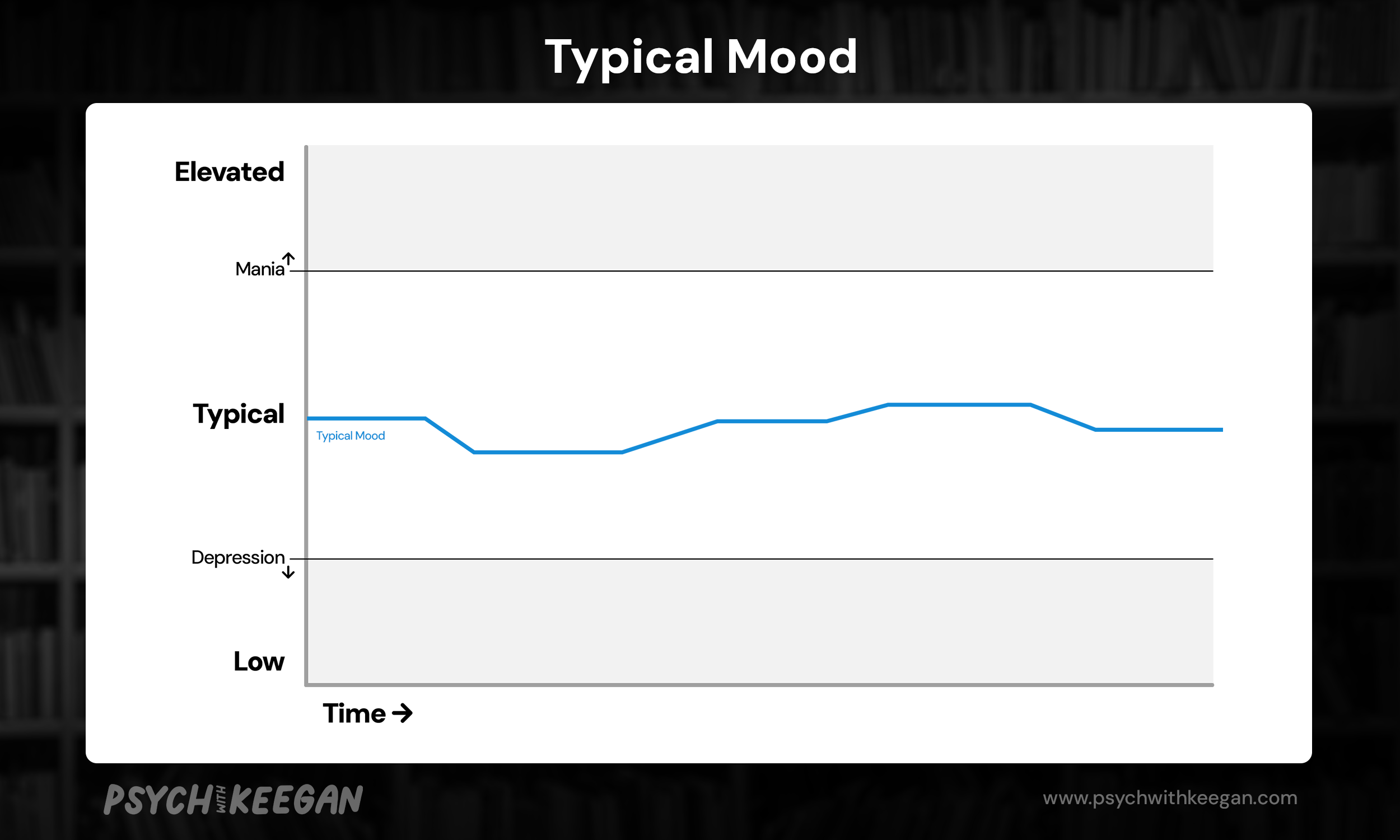
We all have changes that occur with our mood, where we can have a lower mood at times or a better mood at others. Overall though, the average person is going to have a pretty consistent mood, depicted below.
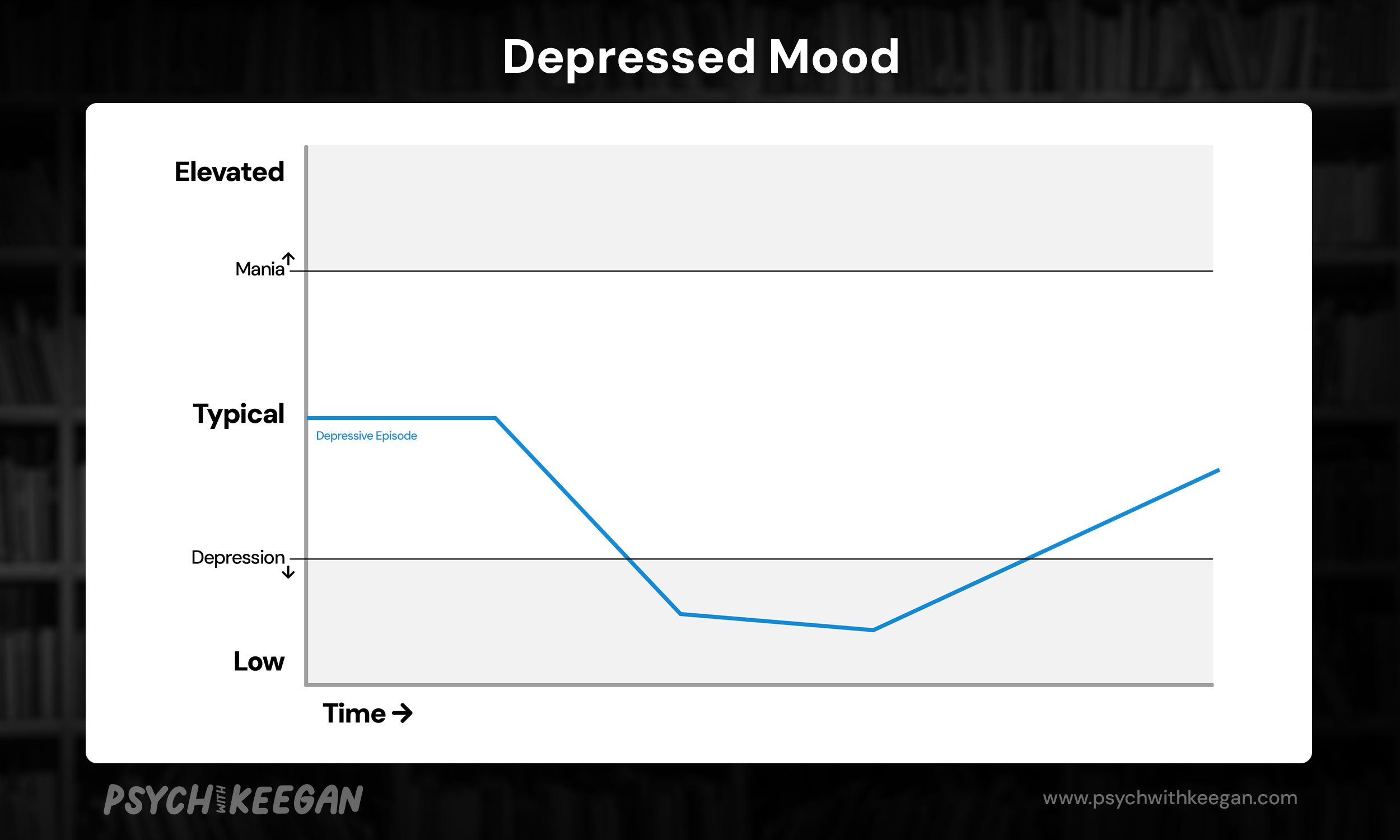
For some people, they have large drops in their mood. This is when a person may be diagnosed with a depressive disorder.
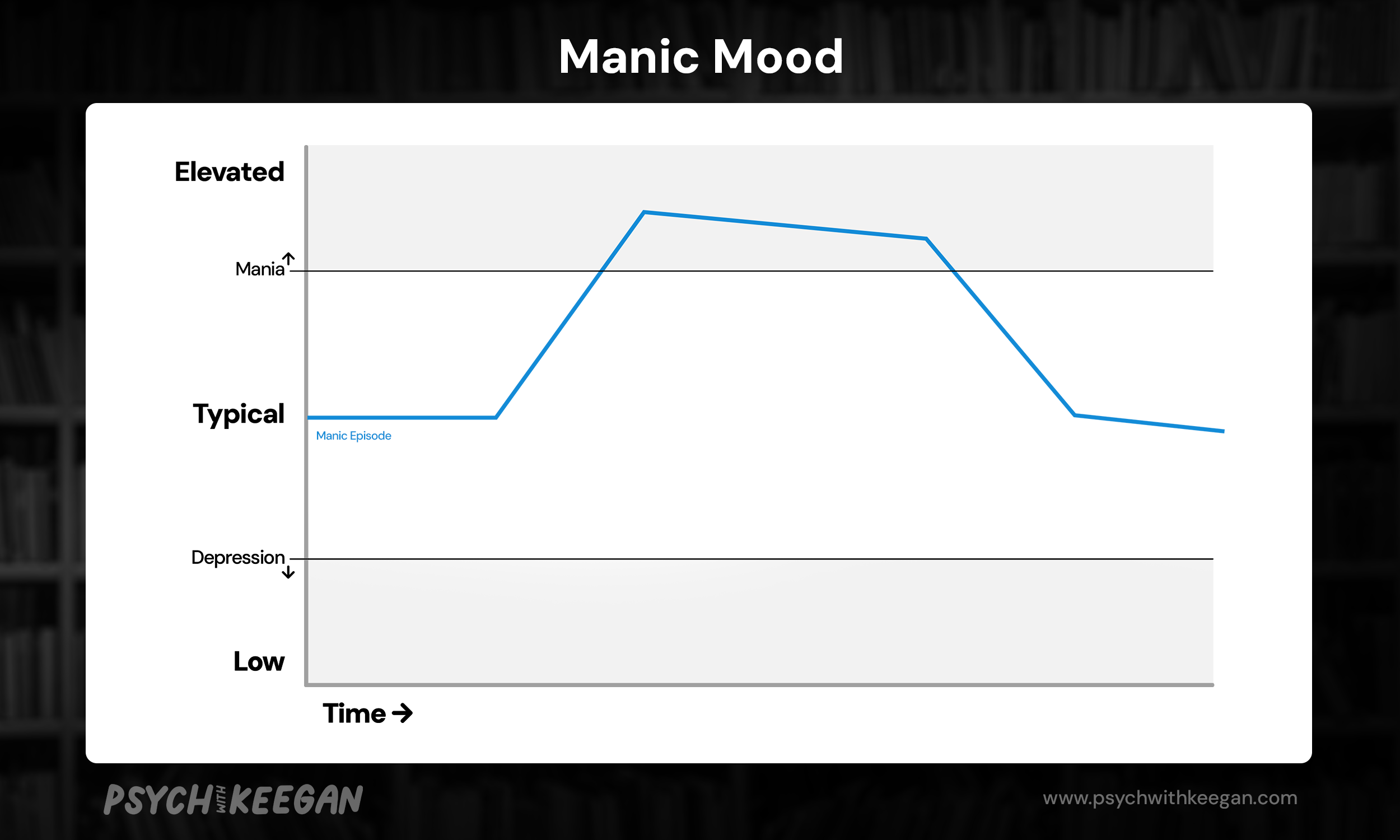
When a person also has points where they have a more significantly elevated mood, this is what we call mania or a manic episode.
For people with a Bipolar Disorder, they have these shifts in their mood where they experience depressive episodes and manic episodes.
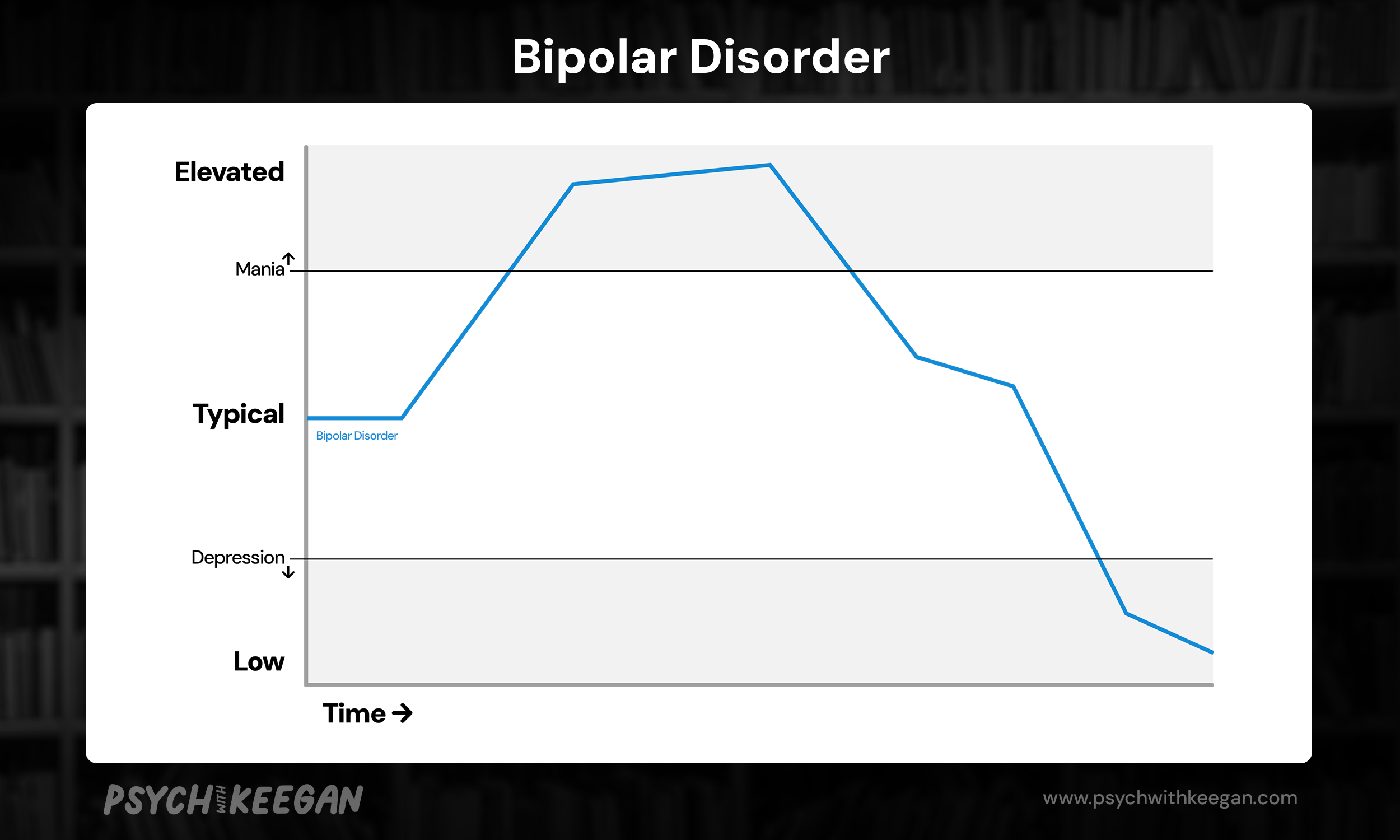
Now that we have that understanding, that depression is the dip in mood and mania is an elevated mood, let’s discuss the criteria for what actually constitutes each of these.
For a depressive episode, there are nine symptoms. A person needs to have at least five symptoms within the same two-week period where their mood has decreased from their usual. Importantly, these symptoms need to be present nearly every day during this time and happen for most of the day.
First is a depressed mood, such as them noticing feelings of being sad or empty.
Second, the interest or pleasure they get from their usual activities or other things they enjoy has decreased.
Third, they may experience changes in appetite or weight. These changes could be an increase or a decrease. Importantly though, if the person is dieting to try to lose weight, these changes should not be attributed to that.
Fourth, the person might sleep more or experience sleeplessness.
Fifth, they could notice feelings of restlessness, where they want to move. Or, on the other end, feelings of being lethargic where they feel like their body is weighted down and harder to move.
Sixth, the person may have feelings of fatigue or low energy.
Seventh, they can experience strong feelings of worthlessness or guilt.
Eighth, difficulty thinking, concentrating, or making decisions are additional symptoms people may notice.
Ninth, some may notice thoughts of death, suicidal ideation, or plans or intentions to end their life.
Those are the nine symptoms that we look for with depressive episodes. Now let’s move on to manic episodes, which are the hallmark of Bipolar 1.
With manic episodes, these are times where the person has an elevated mood. They may feel their mood or emotions in more intense ways during this time. For some, their mood will be more irritable. Often, their energy and activity levels will be higher than is typical for them. These episodes then need to last for at least a week. However, if the person is hospitalized due to these symptoms, the one-week timeline is not necessary. These symptoms also must cause severe impairment in the person’s ability to function socially or at work
During these times of elevated mood, the person needs to meet at least three of the following. For a person who has a more irritable mood, they need at least four of the following symptoms.
First, increased self-esteem or feelings of grandiosity, where they have higher self-confidence than is typical, possibly thinking that they are the best at things or the smartest person related to a topic.
Second is a decreased need for sleep. Note that this is not necessarily that they can’t sleep, but more so that they don’t feel the need to sleep. They might sleep for a short period and wake up feeling rested. In some cases, people will stay up for multiple days without feeling like they need to sleep.
Third, they might become more talkative or have what we call pressured speech. With pressured speech, it can appear that they have so much to say that they can’t stop talking. When you talk to someone with pressured speech, it can be nearly impossible to cut into the conversation without interrupting or talking over them.
Fourth, the person might experience a flight of ideas or racing thoughts. These are where thoughts or ideas are racing through their minds and they don’t (or can’t) stick with them for very long.
Fifth, they can be more easily distracted, even with being easily drawn into unimportant things.
Sixth, the person may experience restlessness and move more in ways that don’t have a specific purpose. For some, they may have an increase in goal-directed activity where they are very focused and intent on accomplishing specific things.
The seventh symptom is involvement in activities that might have undesirable consequences or pose more risk to the person. Examples of this might increase shopping sprees, sexual indiscretions, substance use, or making poor investments.
Bipolar 1 will typically first appear for people in the United States between the ages of 20-30. On average, women have their first episode at 21 years old, while men have theirs at 23. The age of onset can be younger though, and there have been cases where onset occurred in a person’s 60s or 70s.
Risk Factors
There are various risk factors for Bipolar Disorder. Keep in mind, these things do not mean that a person will get Bipolar Disorder, but these things can increase the chances that a person may develop Bipolar Disorder at some point.
Early childhood adversity is one risk factor. This can include conflict in the family, having a parent who struggled with mental health difficulties, or emotionally traumatic experiences.
Stressful life events can also increase the risks of Bipolar Disorder. Events that are more negative are more likely to lead to a depressive episode. Manic episodes tend to be triggered by events that involve a goal, like getting married or completing a degree.
Genetics are a key risk factor for Bipolar Disorder as well. In the general population, there is a one percent chance of developing Bipolar Disorder. However, if a person has a first-degree relative with Bipolar Disorder (such as a parent), the chances increase to five to ten percent.


If you or someone you know are needing immediate mental health assistance, please call or text 988, contact a local emergency telephone number, or go to the nearest emergency room.
By interacting with this website and channel, this does not constitute a therapist/client relationship. This content is intended for the purposes of entertainment and mental health education.
View additional disclaimers and notices on our Disclaimers page.


