
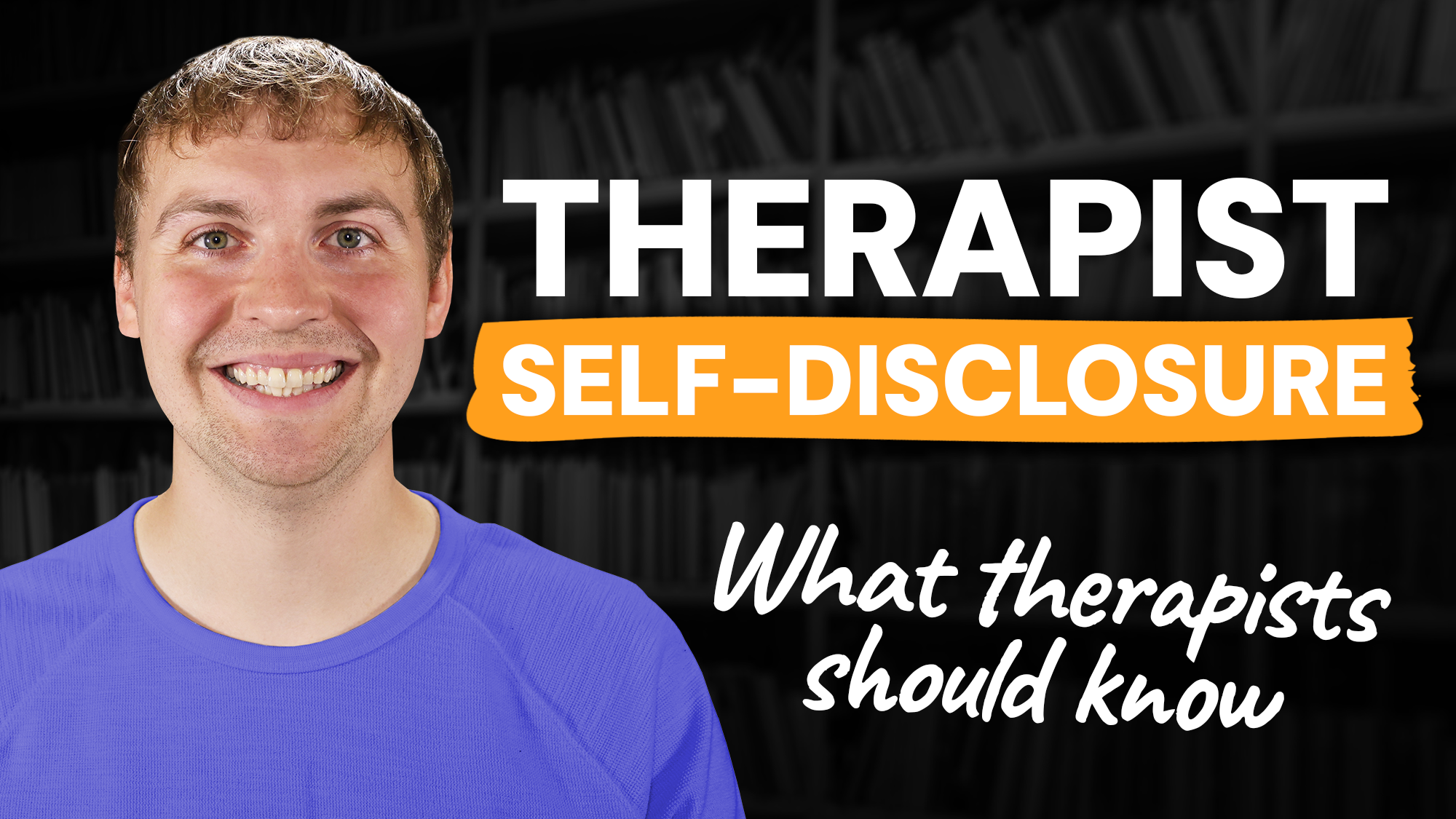
Should therapists share personal details, or does self-disclosure cross an ethical line? In this video, we explore the debate around therapist self-disclosure. While clinicians are often taught to remain a “blank slate,” intentional sharing can build trust and reduce client shame—though doing it wrong risks boundary violations. We’ll break down researcher Danielle Jeffery’s three-step framework, grounded in Carl Rogers’ core conditions (congruence, empathy, and unconditional positive regard), to show how therapists decide when sharing is truly therapeutic.
Watch now to learn how clinicians balance authenticity with boundaries, and share your thoughts in the comments!
If you or someone you know are needing immediate mental health assistance, please call or text 988, contact a local emergency telephone number, or go to the nearest emergency room.
By interacting with this website and channel, this does not constitute a therapist/client relationship. This content is intended for the purposes of entertainment and mental health education.
View additional disclaimers and notices on our Disclaimers page.


