
Ever feel like some people just have an unfair advantage? In this post, we’re pulling back the curtain on the psychology of attraction and the hidden cognitive biases that influence our daily lives. We explore the Halo Effect and its “evil twin,” the Horn Effect. Plus, we break down the science of Proxemics to explain how these four zones of distance and physical proximity can spark a connection. From courtroom sentencing to the world of online dating, discover how these psychological forces shape who we trust and how we judge the world around us.
When we use the word attraction, most people are going to think about this in a physical sense. Such as thinking of someone being good looking. But, attraction can be used more broadly to describe finding someone more appealing. This can include their physical appearance, personality traits we find appealing, intellectual aspects of the person, and more! So as we go through this post, remember that we aren’t always talking about physical attraction. To help understand aspects of attraction, we’re going to cover three main factors—these are proxemics, the halo effect, and the horn effect! Talking through these, we’ll start to understand the ways that a person’s attractiveness can be advantageous for them.
Let’s start with proxemics! This is a fancy word, but it is simply referring to the study of how our personal space can influence us, such as how it can affect our social interactions. You’ve probably had a time where it felt like someone was in your bubble—or they were encroaching on your personal space to the point where you felt uncomfortable. You maybe had this sense they were too close. But how close is too close? Well, that invisible bubble we feel like we have around us is not actually the only zone in our personal space. There are actually four!
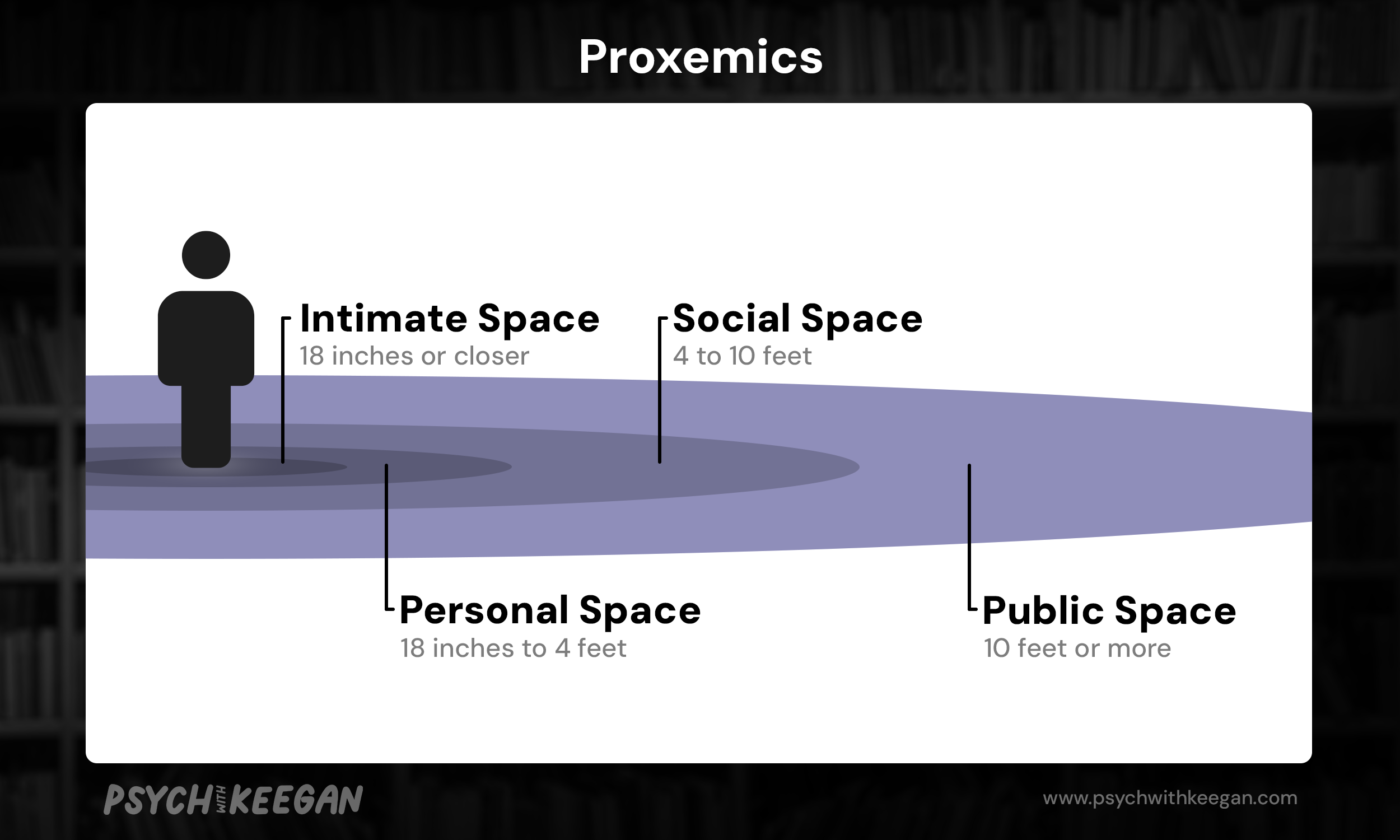
Intimate Space
The closest is our intimate space or intimate distance. This is the area within 18 inches of us—including someone touching us.
Personal Space
That bubble of personal space that people often reference is actually the second layer, sometimes called our personal distance . This is the area from 18 inches to four feet around us. This is a space or distance where we’re usually comfortable with friends and family being.
Social Distance
Social distance is the next area. This is where we’ll usually be comfortable with acquaintances or strangers being. It begins around four feet from us and goes out to ten to twelve feet away.
Public Space
Beyond our social distance is public distance. This is the space from ten to twelve feet away and beyond, some say up to 25 feet out. This is the distance we’ll often feel comfortable with when public speaking, or when we are in public, such as at the mall or airport.
What is Propinquity?
From the study of proxemics, we get the concept of propinquity. This is a tendency where people who are physically closer tend to be more likely to be attracted to each other. Leon Festinger found that people who are next door neighbors actually have a higher chance of being attracted to one another. This isn’t necessarily even in a romantic sense. The attraction can be more broad and result in a friendship, but does also increase the chances of romantic attraction as well.
Festinger found that as people were more physically distant, they were less likely to become attracted to each other. In fact, he found there were differences in the level of attraction people felt even if the person was only two or three doors down in an apartment.
The halo effect is a cognitive bias that we have, which was first coined by Edward Thorndike. The idea behind the halo effect is relatively simple. The more attractive we see someone based on one quality, the more likely we are to then judge other aspects of them as more positive.
For example, if we find someone physically attractive, we are more likely to think they have a higher IQ or better personality. The problem is that them being physically attractive doesn’t actually mean their IQ is higher or that their personality is better. In fact, we might misjudge someone as being more kind than they actually are because of another quality about them.
This is a cognitive bias that can be demonstrated pretty easily. It’s not uncommon for classroom instructors to show students this bias. They might do something like passing out pictures of people and having the students rate their IQ, or describe the personality characteristics that the person might have. When the instructor then compiles the students’ responses, frequently the students will rate the pictures of more attractive people as having a higher IQ. Or they’ll use more positive terms to describe the personality of the attractive people.
We see the Halo Effect in action in the real world as well. Physically attractive people who are on trial can receive lighter sentences. And in online dating, people who are more physically attractive are often judged to have better personalities or to have other qualities that are more positive. Politicians can also take advantage of this. Not only are physically attractive politicians more likely to win, they can also work to demonstrate characteristics that can be advantageous. For example, they can work to come off as more warm and friendly to gain voter’s votes and confidence, while not actually giving details about how they will handle the issues voters care about.
The Horn Effect goes by other names as well, such as the Horns Effect, the Devil Effect, or the Reverse Halo Effect. With this cognitive bias, people who have a quality that is not as attractive are judged to have other less attractive qualities as well. For example, if they are not as physically attractive, people may judge them to have a personality that isn’t as interesting or to not be as intelligent.
The Horn Effect isn’t just based on physical attractiveness though. Like the Halo Effect, it can be based on other characteristics, qualities, or factors. If someone has a learning disability, they might be less likely to be judged positively, and might actually be judged more poorly.
People who have had poor behavior might be at risk of being affected by the Horn Effect also. Think about this in the context of therapy. If someone with a criminal record goes to see a therapist, if the therapist isn’t aware of the Horn Effect, the therapist might not believe the client really is suffering from the problems they report. Or they might be more likely to feel that the client doesn’t actually need help. In other words, because of the client’s criminal record, the therapist could be judging the client in a more negative way.
If you or someone you know are needing immediate mental health assistance, please call or text 988, contact a local emergency telephone number, or go to the nearest emergency room.
By interacting with this website and channel, this does not constitute a therapist/client relationship. This content is intended for the purposes of entertainment and mental health education.
View additional disclaimers and notices on our Disclaimers page.


